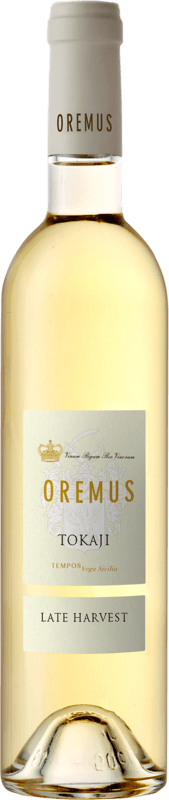
Identity
| Producer | Oremus |
| Year | 2023 |
| Vol | 0.5 |
| Grapes | 50% Furmint, 25% Zéta, 20% Hárslevelű, 5% Muscat de Lunel |
| Color | White |
| Sweetness | Sweet |
Tasting
| Color Desc | Golden yellow with floral and citric hints. |
| Aroma | Floral notes with mellow and citric hints, fruity aromas of apricot, dark William pear, lemon, Jonagold apple, beeswax, chive blossom, almond skin, grapefruit, orange marmalade, root ginger, and spicy oak. |
| Palate | Harmonious, fresh, silky, full-bodied with juicy sweetness balanced by fine and elegant acidity, medium-bodied with a lightly chalky texture and a saline finish, rich and persistent on the palate. |
| Finish | Long and persistent finish with fresh acidity and a saline touch. |
| Food Pairing | Fresh fruit, fine pastry, desserts, apricot tart, blue cheese. |
| Serving Temp | 10-12°C |
| Aging Potential | 5-10 years. |
Profile
Acidity (1-5)
HIGHER THAN AVERAGE
Body (1-5)
AVERAGE
Aroma (1-5)
HIGHER THAN AVERAGE
Minerality (1-5)
AVERAGE
Enology
| ABV % | 12.0 |
| Aging Process | 3 months in Hungarian oak barrels (Szerednyei, 220 litres), 6 months in small wooden barrels, 10 months in bottle. |
| Fermentation | Spontaneous fermentation stopping naturally at around 12% alcohol. |
Terroir
| Soil | Clay soils on weathered andesite and rhyolite tuff. |
| Harvest Type | Manual. |
| Harvest Desc | Several passes during harvest selecting bunches with at least 50% botrytized berries. |
Interesting facts
| Oremus vineyard is credited with producing grapes for the first Tokaji Aszú ever made; owned by Vega Sicilia since 1993; Tokaji is the first wine known to be made from botrytized grapes. |